AI Memory Explained: How AI Is Learning to Remember
AI Explained Β· 2026 Beginner Guide

AI Memory Explained:
How AI Is Learning
to Remember Like Humans

For years, AI forgot everything the moment a conversation ended. That is changing β€” and the implications for how we work, learn, and live are bigger than most people realise.

The Problem That Frustrated Millions of Users

AI Memory Is One of the Most
Important Shifts in AI Right Now
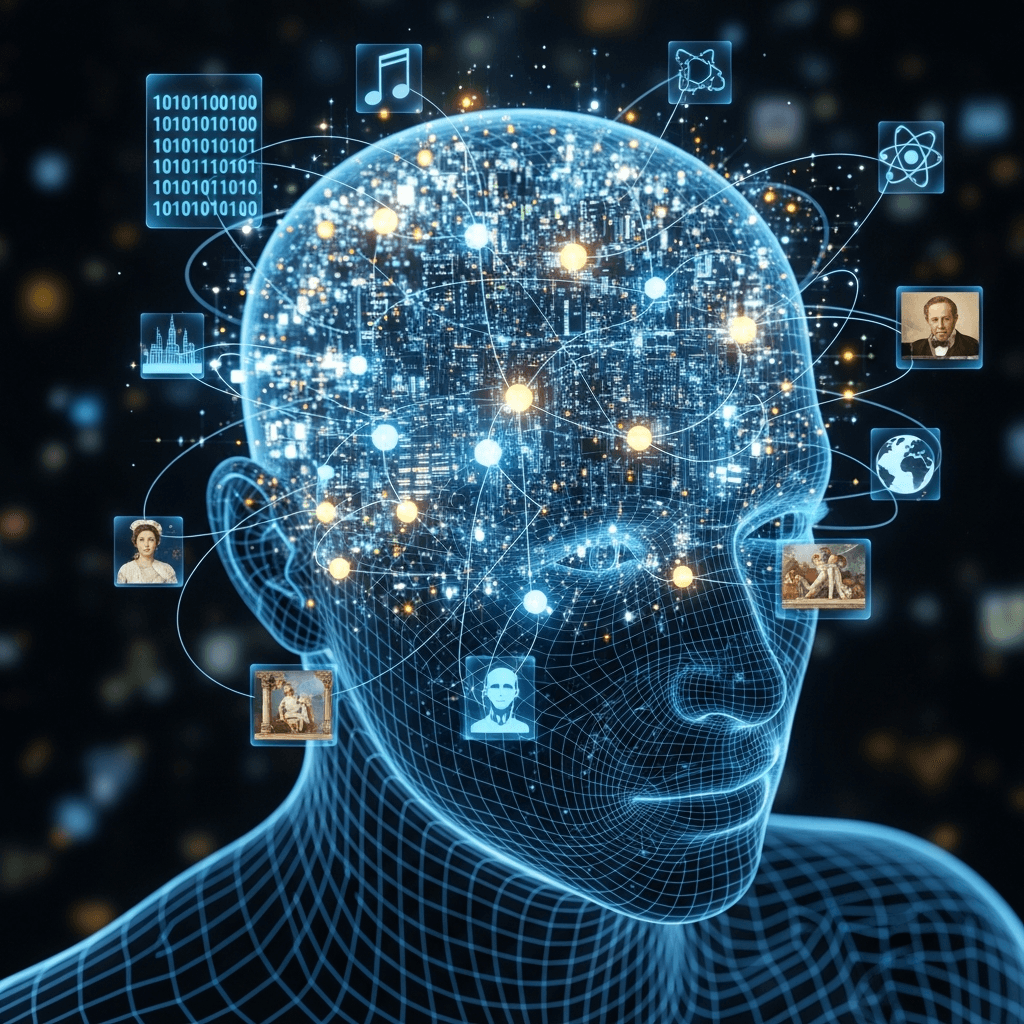
AI memory is not a new buzzword it is the solution to one of the most quietly frustrating problems that millions of people have encountered while using AI tools. You open ChatGPT, explain your situation in detail, get great advice, close the tab, come back the next day and start completely from scratch. The AI treats you like a stranger. Every time. It does not matter if you have had fifty conversations; the slate is always wiped clean.

That experience gets old very quickly. And for AI to become genuinely useful across anything longer than a single session learning a skill, building a career, managing a project it needs to remember things the way any good assistant would. The good news is that this is exactly what modern AI systems are beginning to do, and the shift it creates is substantial.

What AI memory actually means: Instead of every conversation starting from zero, an AI with memory can store relevant information from past interactions and use it to give you more personalised, contextual responses in the future. Think of it as giving the AI a notebook it can refer back to rather than having it start every conversation as if you had never met.

Why This Matters More Than It Sounds

Imagine If a Colleague Forgot
Everything Every Single Day

Here is a simple thought experiment. Imagine you have a brilliant colleague who gives genuinely useful advice but every morning, they wake up with zero memory of everything that happened the previous day. You would have to re-introduce yourself. Re-explain your situation. Re-provide context that you gave them yesterday, and the day before. You would eventually stop asking.

That is what using AI without memory feels like for anyone trying to use it for anything ongoing preparing for a career change, learning a technical skill, managing a project. The AI cannot build on previous sessions, cannot track your progress, and cannot adapt its advice to where you actually are right now. Every session is Day One. Memory changes that dynamic completely.

😀 AI Without Memory
Every conversation begins with a blank slate. The AI has no idea who you are, what you have discussed before, or what stage you are at in any journey.
  • ❌Re-explain your background every time
  • ❌Generic advice not tailored to you
  • ❌Cannot track your progress
  • ❌Useful only for one-off tasks
🧠 AI With Memory
The AI builds context over time. It knows your goals, remembers what you have tried, and adapts its help to exactly where you are right now.
  • βœ…Picks up exactly where you left off
  • βœ…Advice personalised to your situation
  • βœ…Tracks your progress over weeks
  • βœ…Becomes more useful over time
See the Difference in Action

What AI Memory Looks Like
in a Real Conversation

The best way to feel the difference is to see it. Imagine you are a B.Com graduate preparing to move into IT Support. Here is how the same AI handles you differently, with and without memory:

πŸ’¬ AI With Memory β€” The Same User, Two Days Later
β€” Day 1 β€”
πŸ‘€
I’m a B.Com graduate. I want to move into IT Support. Where do I start?
πŸ€–
Great starting point! I’d recommend beginning with ITIL fundamentals and a basic networking course. Once you understand how ticketing systems work, target Service Desk Analyst roles.
πŸ“ Saved to memory
β€” Day 2 β€”
πŸ‘€
What should I focus on this weekend?
πŸ€–
Since you’re targeting IT Support from a B.Com background, and we covered ITIL basics earlier β€” this weekend I’d focus on Jira Service Management. Create a free account and practice raising and resolving tickets. That practical experience will help a lot in interviews.
🧠 Using memory from Day 1

Notice the difference. The Day 2 response is not generic it references your background, picks up from the previous conversation, and gives advice that is actually useful because it knows where you are. That is what memory does. It turns a series of disconnected sessions into something that actually feels like a relationship.

Under the Hood

How Does AI Actually
Store and Recall Information?

Database storage representing AI memory systems

The first question most people have is: does AI have a brain the way humans do? No and understanding why not actually makes AI memory easier to understand. Human memory is biological, distributed across neural tissue, and associated with emotion and experience. AI memory is computational information is stored in structured databases and retrieved algorithmically when relevant.

Think of it like a very organized notebook. When something important happens in a conversation you mention your job goal, your current certification, a problem you are struggling with the AI’s memory system flags it, writes it into storage, and associates it with your user profile. Next time you come back, the system retrieves the relevant entries from that notebook and feeds them into the conversation as context. The AI does not “remember” the way you remember a friend’s birthday. It looks up the note it wrote and uses it intelligently.

πŸ’¬
Step 1
You share something relevant
During a conversation, you mention your background, goals, preferences, or progress. The AI’s memory layer detects this as worth retaining not every word is stored, just the contextually important details.
πŸ“
Step 2
Information is written to memory storage
The relevant detail gets saved in a structured memory store linked to your user profile with a timestamp and context tag. This could be as simple as a database entry: “User is a B.Com graduate targeting IT Support roles.”
πŸ”
Step 3
Relevant memories are retrieved at the start of new sessions
When you start a new conversation, the system pulls relevant memory entries and includes them as background context for the AI. The model can now “see” your history even though the actual conversation just started.
✨
Step 4
The AI responds with personalised context
The language model incorporates the retrieved memories when generating its response producing advice, recommendations, or follow-ups that are specific to your situation rather than generic to any user who asked the same question.
πŸ““ What AI Memory Might Store About You
Background
B.Com graduate, 2023. No prior IT experience. Interested in transitioning to Service Desk roles.
βœ… Active
Current Goal
Preparing for first IT Support interview. Working toward AZ-900 certification alongside ITIL basics.
βœ… Active
Progress
Completed ITIL incident management module. Started Jira practice. Struggles with networking concepts.
βœ… Active
Preferences
Prefers video explanations over text. Studies best in the evenings. Wants practical exercises not just theory.
βœ… Active
It’s Already Happening Around You

Real Examples of AI Memory
You Probably Already Use

AI memory is not some futuristic concept it is already built into tools and platforms that many people interact with daily. The difference is that most people do not realise the memory layer is what makes these systems feel intelligent rather than mechanical.

🎬
Netflix / YouTube Recommendations
Every recommendation you see is driven by a memory of your behaviour what you watched, how long you watched it, what you skipped, what you rated. The system builds a detailed picture of your preferences over time and uses it to surface content that is likely to hold your attention.
βœ…The longer you use it, the better the recommendations become β€” that is memory working.
πŸ•
Food Delivery Apps
Swiggy and Zomato do not show you random restaurants they remember your previous orders, your dietary preferences, your delivery address, and even the time of day you tend to order. That memory shapes every screen you see when you open the app.
βœ…“Your usual?” is memory in action.
πŸ€–
ChatGPT and Claude Memory Features
Both ChatGPT and Claude now offer memory features that let them store key facts about you across conversations. You can tell them your job, your preferences, your ongoing projects and they will carry that forward into future sessions without you needing to repeat it.
❌Without memory: “Hi, I’m Priya, I’m a B.Com graduate…” β€” every single time.
βœ…With memory: The AI already knows and picks up where you left off.
πŸ₯
Healthcare AI Systems
Hospitals and health apps are beginning to use AI that can carry patient history across appointments previous symptoms, treatment responses, medications. The AI does not give generic health information; it gives contextualised guidance based on that specific person’s recorded history.
βœ…Memory here is not a convenience it is a patient safety feature.
πŸ”—
Curious how AI generates responses in the first place? Read our guide: How ChatGPT works behind the scenes explained simply.
Side by Side

Human Memory vs AI β€”
How Do They Compare?

Person thinking and remembering representing human memory compared to AI memory
Human memory is shaped by emotion and experience. AI memory is computational but increasingly sophisticated.
πŸ‘€
Human Memory
Biological, emotional, imperfect. We remember selectively often keeping the feelings more than the facts. Naturally builds context across every interaction.
πŸ€–
Early AI (No Memory)
Zero persistence. Every session was isolated. Excellent at answering questions, useless at building context across time. Like a brilliant expert with severe amnesia.
🧠
AI With Memory
Structured, precise, and scalable. Cannot feel emotions but can store an enormous amount of relevant detail and apply it consistently without forgetting or getting tired.

The interesting thing is that AI memory and human memory are complementary rather than competing. A human assistant remembers nuance, emotion, and unspoken context. An AI memory system remembers exact details dates, preferences, progress milestones with perfect consistency. Combined, they create something quite powerful.

What Comes Next

Where AI Memory Is Heading
in the Next Few Years

Right now, AI memory is still fairly simple storing facts you explicitly share, surfacing them in future conversations. But the next phase is significantly more interesting. As AI memory systems become more sophisticated, they will begin to infer things you have not explicitly told them, build models of your work patterns, anticipate what you need before you ask, and integrate memory across different tools and platforms seamlessly.

πŸŽ“
Personalised Learning
AI tutors that remember exactly which concepts you struggle with, how fast you learn, and what explanation styles work best for you β€” adapting every lesson accordingly.
🎧
Smarter IT Support
Support AI that remembers your entire ticket history, the solutions that worked, and your system configuration β€” resolving issues faster because it already knows your context.
πŸ’Ό
Career Coaching AI
An AI career advisor that tracks your certifications, job applications, interview feedback, and skill gaps over months β€” giving advice that is specific to your actual journey.
πŸ₯
Healthcare Continuity
Medical AI that carries your full health history across every interaction β€” not just clinical records, but lifestyle patterns, previous responses to treatment, and long-term trends.
πŸ”—
Why You Should Care About This

AI Memory Will Touch
Almost Every Career

This is not just a technical feature for developers to care about. AI memory is going to reshape how work gets done across almost every profession because the AI tools embedded in those professions will start getting genuinely better at their jobs as they accumulate context about the people and organisations they serve. The professionals who understand what memory enabled AI can and cannot do will be better positioned to work alongside it effectively.

🎧 IT Support
πŸŽ“ Education
πŸ₯ Healthcare
πŸ“ž Customer Service
πŸ’Ό HR and Recruitment
πŸ“Š Sales and Marketing

For anyone building an IT career right now, understanding AI memory matters because it changes the capability floor for every AI-powered tool you will use professionally. An AI with memory can be a genuine productivity multiplier. Without that understanding, you will use these tools at a fraction of their potential just as many people used early smartphones as expensive call devices and missed everything else they could do.

πŸ’‘ One-Line Summary
AI memory is what transforms AI from a brilliant stranger you meet every day into a helpful assistant that actually knows you and gets more useful with every interaction.”
The technology is here. The tools are rolling it out. Understanding it is now part of being AI literate in 2026.

Build Your AI Knowledge Base

Memory is just one piece of where AI is heading.
Explore the full picture with our free IT career guides.

πŸš€ Explore the Full IT Career Roadmap

Leave a Comment

Your email address will not be published. Required fields are marked *